What half-life tracking is useful for
A half-life view can turn isolated dose logs into a timeline. Instead of seeing only separate timestamps, the user can review how doses are spaced through the week and how closely the logged routine matches the intended protocol.
For Vial AI, the goal is not to make the curve look clinical. The useful product value is context: what happened, when it happened, and how it compares with the schedule the user intended to follow.
What it should not pretend to be
A consumer half-life chart should not be presented as a direct measurement. It is usually a model based on saved assumptions, known or estimated timing data, and the dose history available in the app. That makes it useful for review, but it does not turn the app into a lab test.
This distinction matters for trust. Users can benefit from timing context without the product making claims it cannot support.
How half-life supports protocol review
- It shows when the most recent dose was logged.
- It helps reveal gaps, overlaps, or irregular spacing.
- It makes weekly summaries easier to interpret.
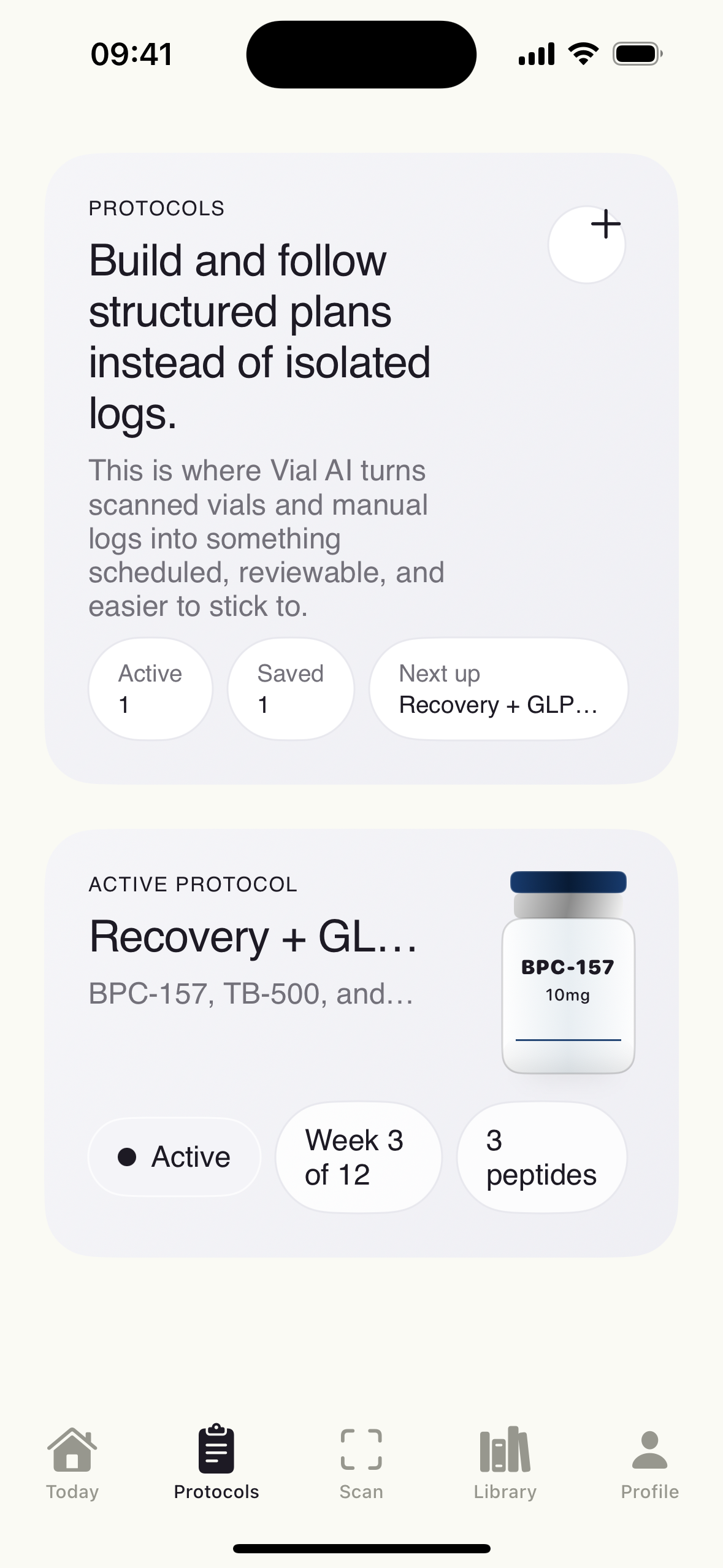
- It gives protocol detail screens more context than a plain log list.
- It helps users review adherence without pretending to prescribe changes.
Why timing context belongs next to dose history
Half-life tracking becomes more useful when it is connected to the rest of the workflow: scan, calculate, log, schedule, and review. A standalone curve can feel technical but shallow. A curve connected to real dose records helps the user understand the week more quickly.
That is why Vial AI treats half-life as part of the broader tracking system rather than as a standalone medical claim.
FAQ
Is a half-life chart exact?
No. In a consumer tracking app, it should be treated as an estimate or review model based on saved assumptions and dose history.
Can half-life tracking tell me what to take next?
No. It can support timing review, but dosing decisions should be made with appropriate professional guidance.
What is the best use of a half-life view?
Use it to understand timing, spacing, adherence, and weekly context alongside the actual dose log.